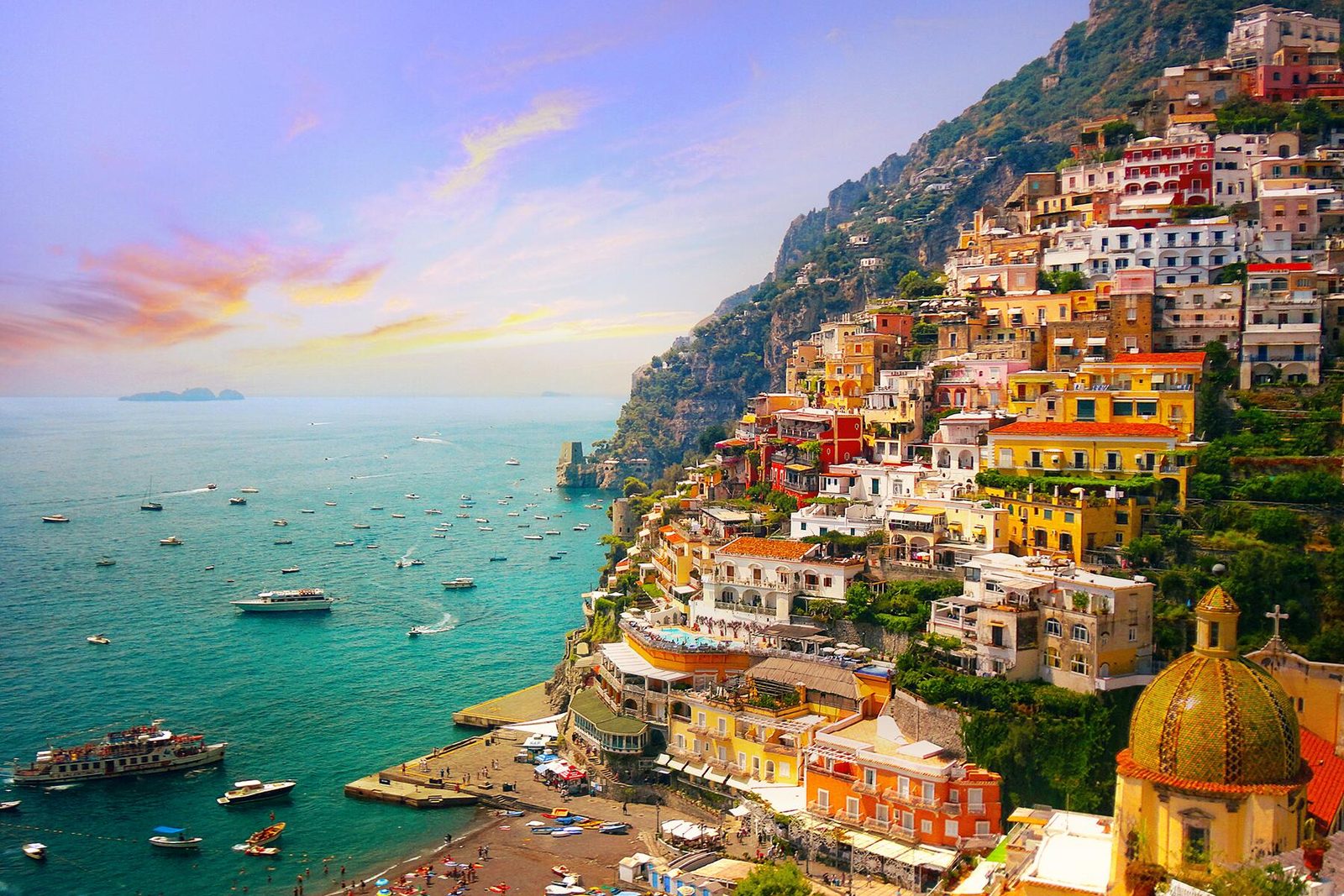
John Steinbeck wrote that Positano "bites deep" — a dream place that isn't quite real when you're there and becomes beckoningly real after you've gone. Seventy years later, the little vertical village on Italy's Amalfi Coast still does exactly that. There is one road, a thousand staircases, and a view in every direction that looks staged. This guide covers the essentials: what to see, where to swim, what to eat, and how to time it all so the magic survives the crowds.
First, understand the shape of the place
Positano is built almost vertically into the cliff between the SS163 coastal road at the top and the sea at the bottom. Everything involves stairs — beautiful, bougainvillea-draped, leg-testing stairs. The golden-domed Church of Santa Maria Assunta anchors the lower town, just above the main beach, Spiaggia Grande. From there, lanes of linen shops, galleries and cafés climb in every direction. Embrace the climbing: the higher you go, the quieter it gets and the better the view becomes.
What to see and do
- Spiaggia Grande — the famous main beach, all orange-and-blue umbrellas and people-watching. Rent a chair, order something cold, and watch the yachts do their slow parade.
- Fornillo Beach — a ten-minute cliffside stroll west brings you to the locals' favourite: smaller, calmer, and with beach clubs that feel like a secret.
- The Church of Santa Maria Assunta — the majolica-tiled dome in every photograph. Inside hangs a Byzantine icon of the Black Madonna, the heart of the town's founding legend.
- A boat day — the coast is best understood from the water. Rent a small boat or join a tour to swim in hidden coves, circle the Li Galli islands, or cross to Capri for the day.
- The Path of the Gods — the Sentiero degli Dei hike from Bomerano to Nocelle, high above the coast, ends with a descent of some 1,700 steps into Positano. Earn your pasta properly.
- Shopping the lanes — handmade leather sandals measured to your foot while you wait, breezy linen everything, and ceramics painted with lemons. This is the town's original craft economy, still thriving.
What to eat (and drink)
You are in Campania, and the eating is serious. Start with scialatielli ai frutti di mare, the region's thick handmade pasta tangled with the day's seafood. Follow with grilled fish dressed only in olive oil and Amalfi lemon — the local lemons are enormous, fragrant, and treated with justified reverence. Save room for delizia al limone, the lemon cream dome that ends half the meals on this coast, and at least one granita or spritz at golden hour, when the whole cliff turns the colour of apricots.
Positano bites deep. It is a dream place that isn't quite real when you are there and becomes beckoningly real after you have gone. — after Steinbeck
When to go
Late May to late June and September are the sweet spots: warm sea, open-everywhere energy, and crowds that are lively rather than overwhelming. July and August bring the full spectacle — book everything early, expect premium prices, and plan your beach time for the morning. Evenings, when the day-trippers leave and the lights come on in the cliffside restaurants, belong to those who stay overnight. It's worth being one of them at least once.
Practical tips
- Arrive by ferry if you can. Boats from Salerno, Amalfi and Sorrento deliver you straight to the beach — and spare you the coastal road's famous traffic.
- Pack light, wear grip. Cobbles, stairs and more stairs. Leave the stilettos and the giant suitcase at home; porters exist for a reason.
- Book beach clubs and boats ahead in summer — the good loungers and the good departure times go first.
- Carry some cash. Small beach bars, ferries and family-run spots along the coast still appreciate it.
- Start early, nap late. Swim before ten, lunch long, wander at dusk. The Mediterranean schedule is a technology; use it.
Plenty of beautiful places disappoint in person. Positano is the opposite: the photographs, somehow, undersell it. Go in the shoulder season if you can, climb higher than feels reasonable, swim before breakfast once — and don't be surprised when it bites deep.