Editor's intro: a formula is an outfit with the decisions pre-made — the pieces, the proportions and the one finishing move, all settled before the morning starts. These ten run on the capsule palette, which is why five minutes is honest: when everything already pairs, getting dressed is assembly, not invention. Learn three and your weekday mornings are solved.
Formula · 3 pieces + shoes
The Column: One Colour, Head to Toe
Black fine-knit, black wide-leg trousers, black ankle boots — one unbroken line that makes any coat or blazer over it optional decoration. The rule that keeps it from reading as a uniform: one texture change minimum, matte knit against crepe trousers against leather. Add nothing; the column's power is that it is finished the moment it is on.
Mid tier
Formula · 3 pieces + shoes
The Suit Effect: Matching Separates
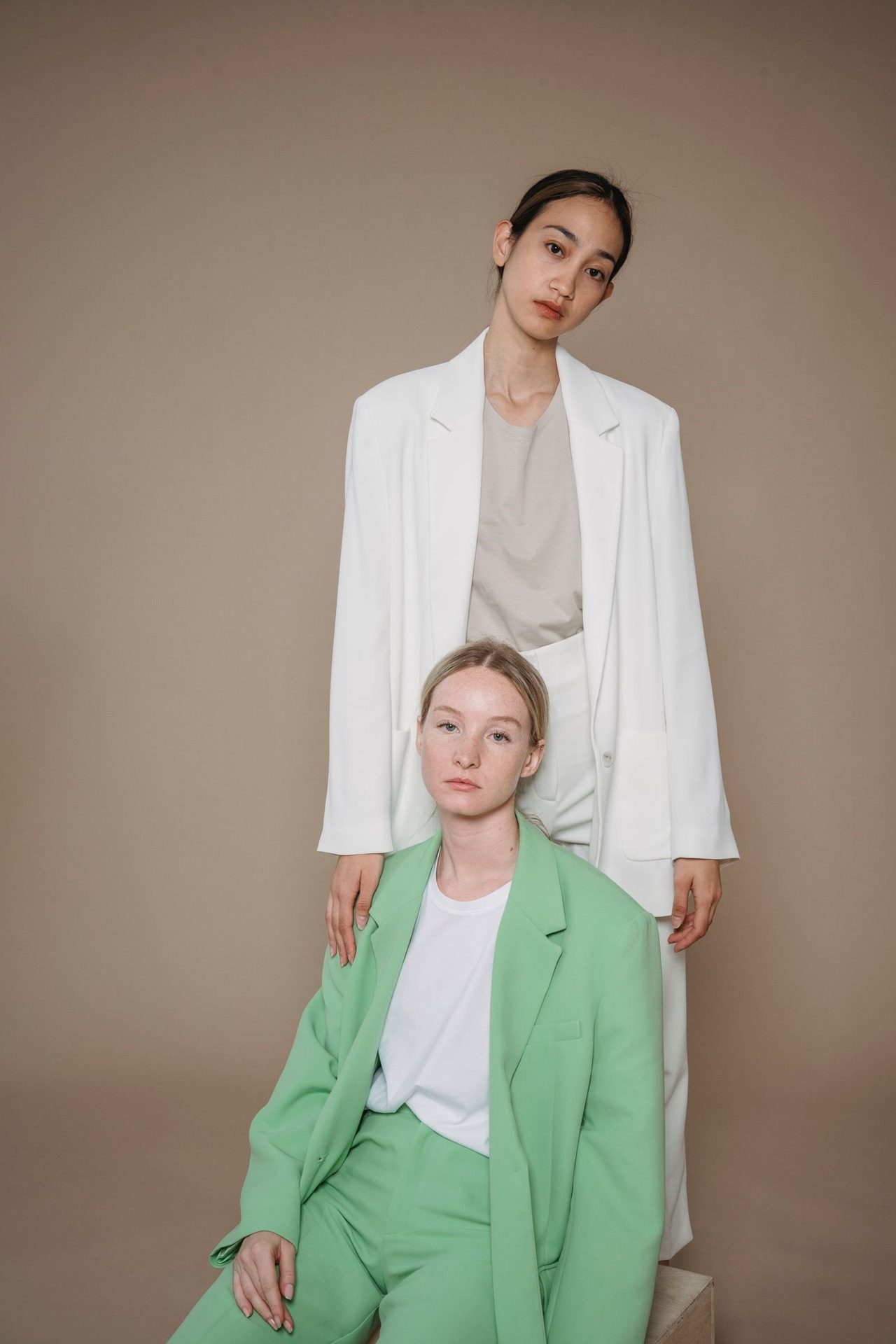
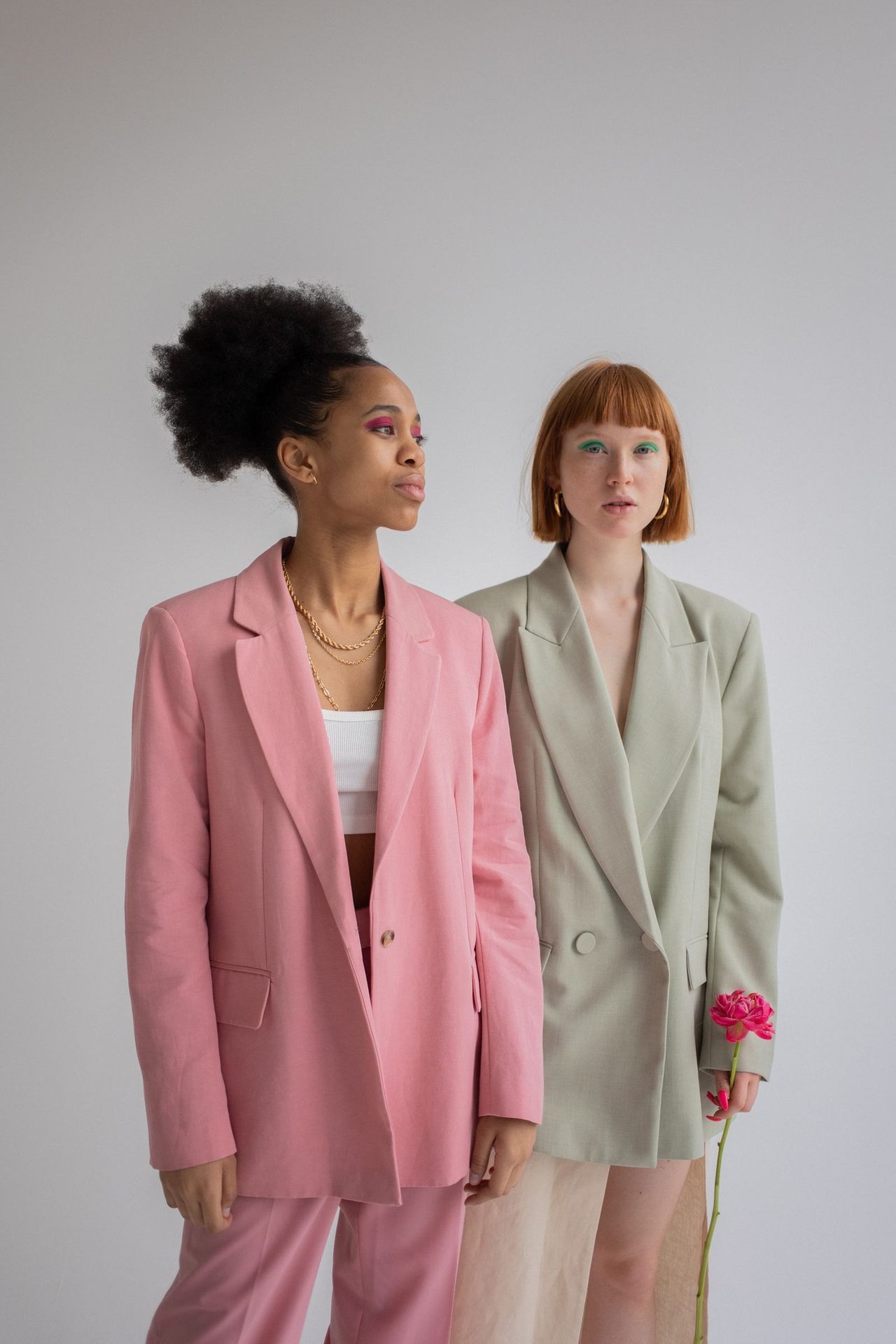
Blazer and trousers in the same colour family — a true set if you own one, near-matches if you don't — with a plain tee underneath and loafers. It photographs and presents like a suit but wears like separates, and the tee keeps it modern. The five-minute version of looking like you planned it yesterday.
High tier
Formula · 4 pieces
The Colour Sandwich
The same colour at the top and the bottom of the outfit, neutrals in the middle: white tee and white trainers with denim and a navy blazer between, or a camel coat and tan boots around black. The echo between the two ends is what makes four ordinary pieces look composed — the cheapest formula on this list and the one people ask about.
Low tier
Formula · 3 pieces + shoes
Knit + Slip: Soft Over Sleek
A fine knit worn over a slip dress, ankle boots below. The knit covers the dress's evening formality and the slip's hem and sheen keep the knit from reading as loungewear — each piece fixes the other. Belt neither layer; the formula lives on the clean drop from shoulder to hem.
Mid tier
Formula · 3 pieces + shoes
Double Denim, Broken Right
Two denims at least two shades apart — dark jeans, pale shirt, or the reverse — and a third non-denim piece to break the set: a blazer over the top, or a coat. Match the shades and it is a costume; separate them and break it once and it is a formula that has worked for fifty years.
Low tier
Formula · 3 pieces + shoes
The Big Shirt Formula
An oversized white shirt, half-tucked at the front only, straight-leg jeans, loafers. Sleeves rolled to the forearm — that roll is the difference between borrowed and styled. The half-tuck defines the waist the shirt's volume hides; skip it and the formula collapses into a nightshirt with jeans.
Low tier
Formula · 4 pieces
Tonal Neutrals: Three Shades of One Colour
Camel coat, cream knit, stone trousers — three depths of the same family, finished with brown leather shoes and bag. Tonal dressing looks expensive because it removes contrast and leaves only texture and fit to judge. Stay inside one temperature (all warm or all cool); one grey piece in a warm tonal outfit breaks it completely.
Mid tier
Formula · 3 pieces total
Dress + Boots + Coat: The One-Step
Any midi dress, ankle boots, the long coat — three decisions, none of them pairing-dependent, which makes this the formula for mornings with no minutes at all. It works precisely because the dress is a complete outfit by itself; the boots and coat are weather, not styling. Keep one dress in the rotation that always fits this bill and the formula never fails.
Mid tier
Formula · 4 pieces
Tailored + Trainer: The Contrast
Wide-leg trousers, plain tee, blazer, and clean white trainers. The contrast between tailoring and trainer is the entire outfit — which is why the trainers must be spotless and the trousers must break cleanly over them. Dirty trainers don't make it relaxed; they make it unfinished.
Low tier
Formula · Basics + 1
The Third Piece Rule
The meta-formula that rescues all the others: any two-piece basics outfit (top plus bottom) becomes finished by adding exactly one third piece — the blazer, a belt, a scarf at the neck, the good watch. When an outfit looks almost-right in the mirror, don't change anything in it. Add the third piece and stop.
Low tier
Questions
Do I need the exact capsule pieces for these to work?
No — formulas care about roles, not items: a column colour, a third piece, two denim shades. Any wardrobe built on a tight palette (two neutrals and an accent) can run all ten. What they cannot survive is a wardrobe where nothing shares a colour family.
Which formulas are office-safe?
The Suit Effect and the Column are boardroom-grade as written. Dress + Boots + Coat works in most offices in conservative colours, and Tailored + Trainer depends entirely on your office's trainer line — when in doubt, swap the trainers for loafers and keep the formula.
Why do these genuinely take five minutes?
Because the pairing decisions were made once, when the formula was written down — not every morning in front of the wardrobe. The palette does the rest: in a capsule, every top already goes with every bottom, so assembly is all that is left.
How many formulas should I actually learn?
Three: one tailored (Suit Effect), one soft (Knit + Slip or One-Step) and one casual (Colour Sandwich). Rotate those and add a fourth only when a morning still stalls — most people find three formulas cover four weeks without repeating an exact outfit.